
In partnership with


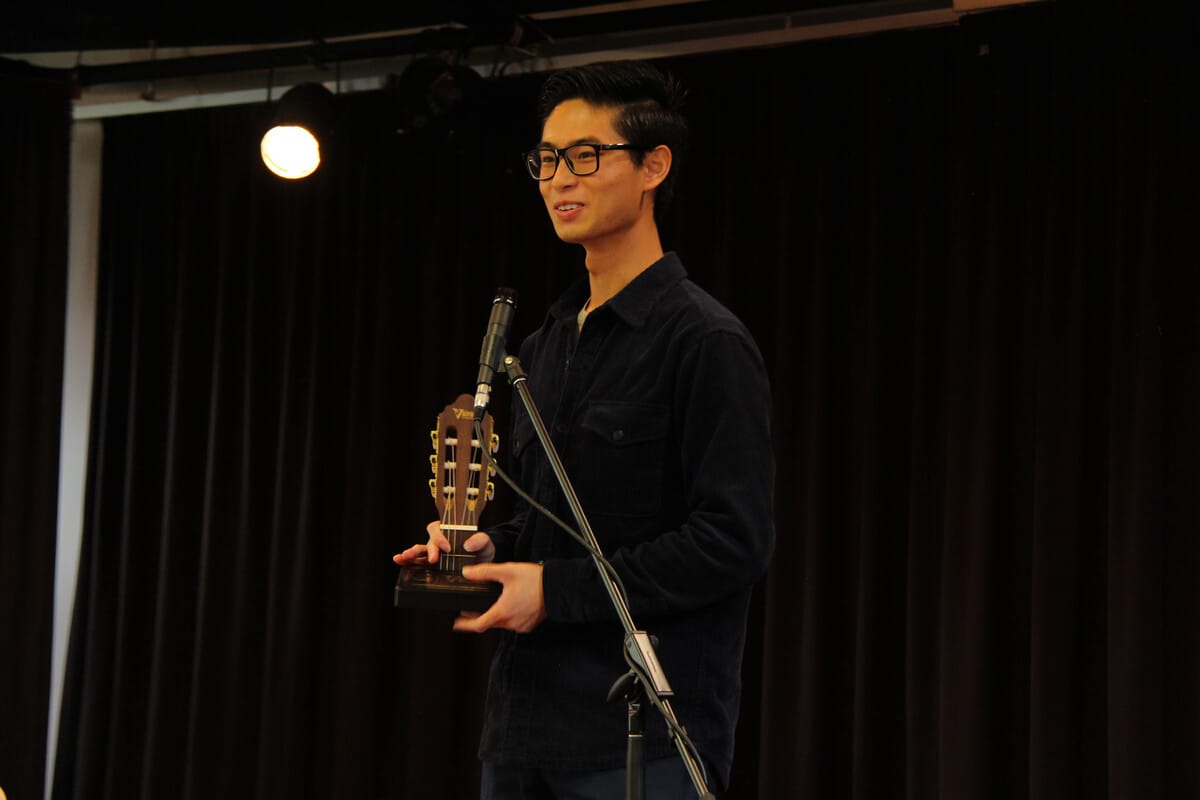
For a long time the guitar did the talking for me.
I would sit with it as if it were a room I could lock myself into. A private room where the sound came back to me unfinished, where notes took the shape of sentence fragments I could not otherwise form. Melody became my language, filling in for words I didn't know how to say aloud.
To most people it is a hunk of wood and metal, sometimes dressed up with paint that catches the eye. For me, until about I was 25, it held a small world folded into the soundhole: hopes, anxieties, the kind of private logic that only made sense when your fingers could find the right place on a fret.
After 25, the guitar began to mean something else.
It stopped being my safe space and started becoming a diary of what I had given up.
I miss my girlfriend’s birthdays and my Grandma’s funeral because I chose to go to a jam session or travel the world. It was a reminder of how I put my pursuit of art over my mind and body. I cancelled important appointments and therapy sessions, some that were organised to address serious issues I was facing. All in the name of taking another new student or to go to that one gig that was going to give me great “exposure.”
And this is a paradox people forget to mention when they speak of music’s power: the very thing that moves others can, at some point, wear you thin from the inside.
Playing becomes generosity, and generosity becomes an obligation, and that obligation asks for more than you can afford to pay without withdrawing from the rest of your life. You give away your joy so others can carry it for a while; you start to believe that the only way you can be human is through a song, hiding behind your instrument.
That was my life for 10 years.
As I write this I am about to turn 28 and the truth is not dramatic so much as persistent: I felt less human the more I lived as a musician. When I say that to friends who are not musicians, they look at me as if I’ve lodged my head inside the instrument—perhaps I had. There is an intimacy to that image, the way a soundhole can become both window and trap.
This year I tried something different. Something I’d never done before.
I began saying the things I could not previously voice, but without turning them into essays or confessions designed for an audience. I started asking questions to my fellow musicians, and guitar students nudged the conversation away from setlists and into uncharted territory for the aforementioned “tortured artist.”
When we meet, the default question was almost always: “How’s the music going?”
It is a soft ritual that keeps the ritual intact. The next hour would be filled with music talk about the albums they’d be thinking of releasing, the next festivals, new songs or creators they found on instagram with cool music concepts.
This year I tried something different: I asked, “How are things away from music?”
If they avoided the question with a “yeah…things are okay, can’t complain” with the typical pause between “yeah…” and their next sentence, I’d ask again: “No mate how are you really going?”
And that’s when things finally got honest. It got real in the sense that we’d both let our music personas have a break, and we became people for the first time in a long time. We became two mates, having a chat, and listening to the words coming out of our mouth, not our guitars or pianos speaking.
I’d get responses such as:
“I’m not sure it’s worth continuing,” or “It’s been so hard.”
I’d do my best to follow up by saying something like “What makes you think that?” or “What has made it so hard for you?”
You might be expecting a hard, straight, black and white solution to all this. I’ll tell you now that, I never remember the solutions and words that come out of our conversation.
But I can tell you that after I ask these questions, and my mates answer, the rest of our conversation is filled with honesty, and vulnerability that we both didn’t know we were capable of showing.
Sometimes these conversations lasted for hours, and when we finish up, we might not even know what we said half the time.
But what we do know, is that we feel so much lighter. The pressure is lifted, and even if it’s temporary, we feel we have found a way to keep on going for at least another day, and not just with our music, but hope that our lives will get a little bit easier.
Even if we know it won’t get easier, there is a belief that we will find ways to cope with the hard times.
When I think about opening up to someone, I don’t want them to necessarily start dishing out advice. I know when I do that to others, as much as my advice comes from good intentions, it’s not what’s needed.
I learnt this in lessons with some of my students, especially the ones about to finish high school, who are feeling the heat and pressure of their final exams. On one hand they’re dealing with their lives changing because in 6 months time they’re childhood essentially ends, these exams, they know it won’t define their life, but it’s all they know because high school has been about exams, and they just want to be alone, yet feel misunderstood.
It’s weird to think as a teacher, the best way you can be a mentor and teach is to listen to your students and peers.
I started saying things like:
“It’s okay to feel that way you know. That sounds really stressful, I know.”
And this is the moment I learnt to be truly empathetic by saying things like:
“You know I was a high school student too, I went through something similar, I was stressed out of my f***ing mind. It’s normal to feel this way. You may not know what’s going to happen. Neither did I.”
In that moment, I know I have so many bits of advice and lessons I could give, that I know work. But even if they don’t know yet, listening is the thing that will give them comfort, and makes them feel less alone to know that someone they know and trust has experienced what they are now, but have found a way to get through it.
That’s when they are able to start articulating how they feel, and I can tell you now, it’s incredible how often my student’s come to me the week after saying:
“You know you listen gave me a way to express my emotions and you’ve also helped me understand other people more as well. So even though you may not see the size of this impact, I can.”
It’s true what they say. You can say a lot, by saying very little or nothing at all.
And just on that, I want to leave you with one more thing I’ve learnt this year.
Most musicians I know who have depression or have struggled with mental health, have a way of wanting to be there for people no matter what. It’s their superpower, but also their way of hiding the pain they’re going. They become the person everyone can depend on, and it doesn’t matter if it’s the guy you can call for any gig, or your friend who you can call to help you fix a leaky pipe. If you are someone like that, here’s what I want to tell you.
You can set limits and not feel guilty for not being there immediately. I felt the more I gave, the more of myself I lost and there was a point where I had to say:
“I can’t go there right now…but just give me a moment to rest, and I’ll be back.”
You can also say “I don’t want to talk about it…not now.” and then tell people what you don’t need.
And this ties everything together. Because it becomes a reflex to say this. It’s like a sneeze. It’s the first thing you blurt out, and your first instinct is to hide your pain.
But deep down, you want someone to listen, and to give you the chance to.
I started saying “not right now” because I wanted the person I was talking to know that it means so much that they want to help, and if they know that I’m willing to listen later on, it takes pressure off them, so they don’t feel uncertain about poking me to answer.
You know, sometimes I think perhaps I should’ve stuck with the electric guitar. There’s no soundhole, so I can’t possibly get stuck in the guitar. Too on the nose? Probably.
But recently I went back to playing guitar regularly again. I pick it up, tune it, choose a song to play, maybe I had a melody in my head so I try to figure it out and then let it naturally turn into a song.
I’m still stuck inside my guitar, yet I don’t feel trapped. I can look up and see that there is a way up, and I get out of it any time I want. I never did before, when I wanted to stay there, and never be found.
Funny enough, I don’t feel I need my guitar and music to tell people what I’m going through now.
It’s still not easy. Saying things like: “I’m not okay”, “it’s been tough” or “I don’t know if I can keep going” is not natural, unlike playing over a 12 bar blues for 12 minutes.
But I feel freer than I once did.
I don’t have to speak with my instrument, my music.
I can just…speak you know.
Now music doesn’t really give me any happiness or pain. It just is. It’s there for me when I need it, it’s there for me when I want it. And when I don’t need it, I can step away from it, and it doesn’t matter. Because when I come back, it’ll be ready, as much as I’ll be ready to return.
I hope this helps you, especially if you’ve had a tough year.
Thank you for taking 10 minutes to read today’s newsletter. It means a lot.
When I sat down to write today’s newsletter, I wasn’t sure if people would connect with it consider it may turn into one of these “lessons I’ve learnt” posts.
But in the end, I reminded myself that sometimes people need to hear these types of stories. They may not necessarily implement into their lives, but it gives them hope and belief that someone who is experiencing a similar struggle as them, has found a way to keep going.
I also hope that the lessons I’ve learnt inspire you to discover your own lessons.
And if you ever need someone to talk to, please send me an email, reach out, I’ll do my best to reply. If I don’t reply straight away, know I’ve still read your email and I will do my best to get back to you asap.
In the meantime, take care of yourself and be well.
-Brian
P.S. If you’re a long time reader and my newsletter has helped you in your mental health/music journey, please consider upgrading your subscription which costs less than two coffees.
If you decide to upgrade, you’ll get an exclusive first look at the full drafts where your input, questions and feedback will shape the final outcome of each newsletter.
You’ll also get access to audio versions of each newsletter, done by me, not an AI bot, and podcasts where I have conversations with fellow musicians and friends about their mental health challenges as musicians.
You’ll get also get access to audio versions of each newsletter, done by me, not an AI bot, and special video podcasts where I have conversations with fellow musicians and friends about their mental health challenges as musicians.
Here’s a sneak peak at what you get, with one of my audio newsletters from earlier this year.
But even if you’re a free subscriber, you’re already supporting me, and I’m grateful for that.
So I’d love for you to forward it to a friend or fellow musician who might find comfort in it. The bigger our community, the more we can help artists around the world share their mental health stories and feel less alone.
Speaking of podcasts…
I’d like to quietly announce that I’ve just uploaded the very first episode of the Mental Musician podcast!
This has been a long time coming, I wanted you guys to be the first to know about it.
The first episode features my good friend Michael Wright, a wonderful teacher and the smoothest jazz bassist kicking around in the UK. We talk about his life as a professional musician, dealing with depression and ADHD, and how he’s found ways to open up and be vulnerable. All in all, this conversation and podcast is about having real conversations about the real mental health struggles that artists around the world go through.
I hope you enjoy this first episode, save it on your spotify/Apple playlist or wherever you listen to your podcasts. Please share it with your friends and fellow musicians and even if you only listen to half of it, it’ll mean the world to Michael and me.
Spotify

Apple Podcasts

Thanks for reading!
Feeling Anxious? You are not alone

Get help from a licensed therapist - anytime, anywhere. BetterHelp has helped over 5 million people, with no commitment, 100% online.
Take the first step, with 25% off your first month, and a network of 30,000 therapists to choose from. BetterHelp therapy is HSA + FSA eligible. Just take our quiz to get matched with a therapist and start your journey.
This email was delivered by a third-party, on behalf of BetterHelp. Copyright © 2025 BetterHelp. All Rights Reserved. 990 Villa St, Mountain View, California, United States.
