
In partnership with

For most musicians, loneliness is as predictable as torrential flooding in Sydney in January, followed by a week of 40 degree heat. You don’t even check the forecast anymore. You just prepare for it.
Depression feels hidden in the starter kit you receive when you decide to become a musician. Beneath the gear, the promise of gigs, record labels and long jam sessions is a quiet lifetime of doubt, pain, insecurity and anxiety.
For musicians who live with depression, they tell themselves that music is enough to make them feel whole. No matter where they go, music is the one thing that helps them feel connected to the world.
But that tether — the one you grip like a lifeline — eventually frays.
When it does, reality kicks in. There’s no soothing the depression. Once the music stops, it swarms you. It clings to you. It reminds me that you’re all alone.

I’ve learnt over the last decade that being a great musician also requires you to be a great magician. A cunning illusionist who never gives away their secrets.
My girlfriend described my life in the simplest, yet most accurate way:
“You are so good at being put together, it’s impossible to tell if something is wrong.”
The irony is that the only time a musician can truly be vulnerable — spill their pain, pour their heart out — is through a performance. On stage. In a music video. Through someone’s headphones on Spotify.
And yet, even then, the comments read:
“He played that so beautifully.”
“She is a master at her craft.”
“They are one of the most talented musicians on the planet.”
Even when a musician tries to be honest, no one asks, “are you okay?” because they’ve become so good at their art that the pain becomes part of the art.
Over the last decade, this has been one of the great skills I’ve developed. I’m far better at hiding my pain than I am at playing guitar. So much so that whenever I performed an emotional song with a heartbreaking backstory, I did it with a smile, a laugh, or even a joke. I could never bring myself to tell the full story because I didn’t want to break the illusion.
Because I’ve told myself this story for most of my adult life, my mind has become the loneliest place I know. Even when I’m surrounded by friends, family, or 70,000 people, I still feel trapped inside the strongest bubble in the world.
Speaking of 70,000 people, last week I went to an Ed Sheeran concert in Sydney. It was one I had been looking forward to. I’ve grown up listening to and following his career, and to me, he’s one of the few musicians I genuinely look up to.
Not just because of his music — although I could listen to him all day. Not because of Grammys or impressing music academics (and I’ll admit it makes me smile that purists still struggle to understand his success). It’s because he has found a way to let pain and hope live as friends, not rivals.

The week leading up to it has been one of the toughest of my life (to date. I’m 28, so I know there will be tougher moments).
I’ve fallen back into another bout of deep depression, just when I thought I had recovered from a five-year battle. And with my Grandma in palliative care, my Dad, uncle and cousin are doing everything we can to hold things together.
My Grandma was born in Indonesia in the 30s, later moved to China and split her life between China and Hong Kong. She and my Grandpa gave my Dad everything they had so he wouldn’t live a life of poverty. He became the first in our family — on both my mum and dad’s side — to break that chain, build a successful business and buy a home.
But to me, that was always just a story.
I didn’t meet her until 2011, when I was 14. By then, I had already decided I was going to be a musician. I spent years teaching guitar, gigging, and locking myself in my room to practise. Between 2011 and 2025, I can count on both hands how many times I saw her.
On one of those visits, she gave me an electric guitar. I played it throughout high school before selling it in 2016 for a miserly $125. I hate my 18-year-old self, not just because I hardly hesitated at selling it, but because I didn’t even play it for my Grandma before I did.
So when my Dad called at the start of this year to tell me she had been moved to palliative care, I felt overwhelming regret, shame and guilt.
It was strange and numbing. I kept telling myself that, as much as she is family, I don’t really know her. I know stories. But I don’t know her. By the time I met her, I felt grown. I also wasn’t close to my Dad’s side of the family beyond him.
Now, as my Dad and uncle feed her, bathe her and tuck her into bed, I’ve tried to prepare myself for when her time comes. Maybe that’s because I’ve been fighting suicidal ideation for the last two years. Death has not been a foreign thought.
Even so, as emotions, tensions and family quarrels fill the days, I’ve convinced myself I need to be put together. Whatever they need, I’m there. Food deliveries. Walks. Coffee. Anything.
But even the best illusionists run out of tricks.
This one has too. The magic is gone.
What I’ve admired most about Ed Sheeran is that his vulnerability on stage is matched by his honesty off it.
In interviews, podcasts and most notably his documentary The Sum of It All, he has spoken candidly about therapy, suicidal thoughts, the grief of losing his best friend Jamal Edwards, going through his wife’s cancer battle and the copyright lawsuit that threatened to derail his career.
When he played “Eyes Closed,” dedicated to Jamal, he said it was his way of dealing with grief.
When he sang:
“I pictured this year a little bit different
When it hit February
I step in the bar, it hit me so hard
Oh, how can it be this heavy?
Every song reminds me you're gone
And I feel the lump form in my throat
'Cause I'm here alone”
That’s when my illusion collapsed.
I had pictured 2026 differently too. After five years of depression, suicidal thoughts, seizures and breakdowns, I thought this year would be boring. Uneventful. Calm.
Then February came. And my Dad’s phone call changed everything.
I kept telling myself she’s 85. She’s battled cancer for two years. She’s lived a full life. Because of her sacrifices, we have ours.
But even if I don’t know her well, how can it still feel this heavy?
Because every time I walk into her room, I’m reminded of what won’t happen.
She won’t see me get married.
She won’t meet her great grandchildren.
And then I look at my Dad and uncle — about to lose their mum — still trying to make sure my cousin and I are okay.
The one thing I knew only I could do was play for her.
So I did.
Every day I bring my guitar. I sit beside her. Her eyes barely open. I tell her she doesn’t have to open them. I’ll play her to sleep.
In the back of my mind, I hope she wakes up after.
But I know each time could be the last.
The music means something different now. It isn’t performance. It isn’t illusion.
It’s rest.
It’s comfort.
It’s goodbye.
When Ed sings:
“I’m dancin’ with my eyes closed…”
I feel like I’m playing my guitar with mine closed.
With a lump in my throat as I do my best to stay strong for my Grandma.
There isn’t much else I can do.
Every time I look at my guitar, I see her. I see my family.
So I keep playing. At least now I can play for her.

Every musician plays for different reasons.
Some for the crowd.
Some for love.
Some for creativity.
Some for themselves.
My reason has changed as much as I have.
When I was diagnosed with depression at 17, music was an escape. A distraction. The friend that told me everything would be okay as long as I didn’t think too hard.
When panic attacks and inner turmoil became unbearable, music became a reminder of how lonely I was. How good I had become at hiding.
Now it feels like it has found a middle ground.
It doesn’t erase the pain. But it sits beside it.
Even though I’ve missed so much with my Grandma and my Dad’s family, there is still today.
The end is inevitable. But it hasn’t come yet.
There is still time.
As limited as the calendar may look, a single day can last a lifetime. The memories I make now with my Grandma will stay with me long after she’s gone.
Not long ago, Ed Sheeran showed me it was okay — not just as a musician, but as a man — to go to therapy. To speak. To be vulnerable.
Now he’s reminded me that the people in our lives are what keep us from being alone. And even when they leave this Earth, they remain — in memory, in habit, in love.
A musician’s journey doesn’t have to be lonely.
I don’t have to hide your pain behind your music.
And when I’m struggling, I want to tell myself it’s okay to tell someone.
Maybe that’s where the real magic begins.
Because this time, it isn’t an illusion.
It’s real.
Thank you so much for joining me for today’s newsletter. I’ve written some tough ones before, but this one was arguably the toughest. But I knew I wanted to write it, not just to help me process what’s been happening, but because I know some of you are either going through something similar, or know someone who is.

For the first time in my life, music is no longer an escape. It’s helping me accept what’s happening, including the most painful moments.
I can’t change what I did or didn’t do over the year, but I can do something now with the time my Grandma has left.
So if any of you have a friend or family member who’s ill, please hug them for me. In fact, send a text message to anyone you love. You never know when they’ll go.
And if you found today’s newsletter helpful for your own grief journey, I’d love it if you could share it with a friend.
Simply click the button below and refer my newsletter to them. The more you share, the more we can help more and more people who are going through something similar, and help musicians find ways to express their pain without having to hide behind their music.
P.S. If you’re a long time reader and my newsletter has helped you in your mental health/music journey, please consider upgrading your subscription which costs less than two coffees a week.
If you decide to upgrade, you’ll get an exclusive first look at the full drafts where your input, questions and feedback will shape the final outcome of each newsletter.
You’ll also get access to audio versions of each newsletter, done by me, not an AI bot, and podcasts where I have conversations with fellow musicians and friends about their mental health challenges as musicians.
You’ll get also get access to audio versions of each newsletter, done by me, not an AI bot, and special video podcasts where I have conversations with fellow musicians and friends about their mental health challenges as musicians.
Here’s a sneak peak at what you get, with one of my audio newsletters from earlier this year.
But even if you’re a free subscriber, you’re already supporting me, and I’m grateful for that.
So I’d love for you to forward it to a friend or fellow musician who might find comfort in it. The bigger our community, the more we can help artists around the world share their mental health stories and feel less alone.
And if you want to follow more of my work:
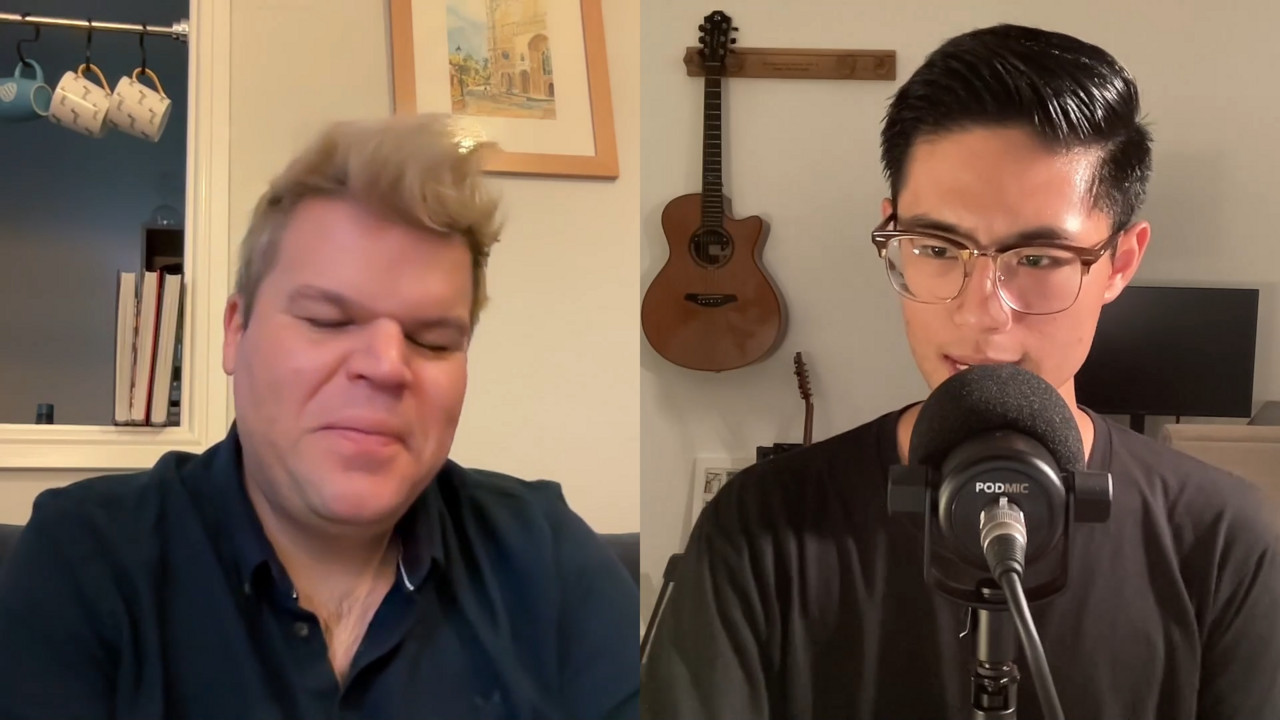
You can also listen to my latest podcast episode with my friend Michael Wright, where we talk about how we’ve come to terms with our respective suicide battles.
Thanks for reading!
When it all clicks.

Why does business news feel like it’s written for people who already get it?
Morning Brew changes that.
It’s a free newsletter that breaks down what’s going on in business, finance, and tech — clearly, quickly, and with enough personality to keep things interesting. The result? You don’t just skim headlines. You actually understand what’s going on.
Try it yourself and join over 4 million professionals reading daily.
