Back in 2019, I told my girlfriend I wanted to put my music career first.
Seven years later, as I write this, and she’s still with me, I think to myself:
Wow… what a dickhead I was.
At the time, I’d say it was the “musician mindset” I thought I needed to have.
We had only been together for six months, and I was already ready to dive head first into being an artist, rather than being a good partner. Someone actually thinking about building a life with her.
I remember asking her to just “be okay” with the fact I might not spend as much time with her.
Like that was a reasonable thing to say. Like if you date a musician, this is what you sign up for.
You sacrifice everything for the craft. You go all in. You don’t let anything get in the way.
As if those two things could not exist at the same time.
About a day later, I went back to her and tried to soften it.
I said something along the lines of, “I didn’t mean it like that. You’re just as important. I just want to make room for both.”
Which, looking back, was really my way of saying, “Can you just forget about it?” after realising I had said something pretty stupid.
Even now, writing that out, I can hear how it sounds.
And I still don’t know how she didn’t run at the moment.
I’ve been listening to a new podcast called “The Secret World of Roald Dahl”, and there is so much more to the man, the myth, the legend who brought us classics like The BFG, James and the Giant Peach, and of course Charlie and the Chocolate Factory.
I had always just thought of him as the guy who wrote these incredible children’s stories, but the more I listened, the more I realised how much of a life he actually lived outside of that.
Did you know he was a fighter pilot for the RFA?
Or that he worked as a spy for the British, trying to influence the US to support them during World War II?

He looked like a pilot that’s for sure.
He even wrote the screenplay for the fifth Bond film, You Only Live Twice, as well as Chitty Chitty Bang Bang.
And then there’s the part of his life that sounds like something straight out of a 1940s noir mob film—he had a reputation for being quite the charmer with the ladies, someone who could walk into a room and leave with the attention of just about anyone, and was involved in more than a few affairs along the way.
(I mean seriously listen to the podcast. It is one of the best biographical retellings you’ll listen to on any streaming platform. )
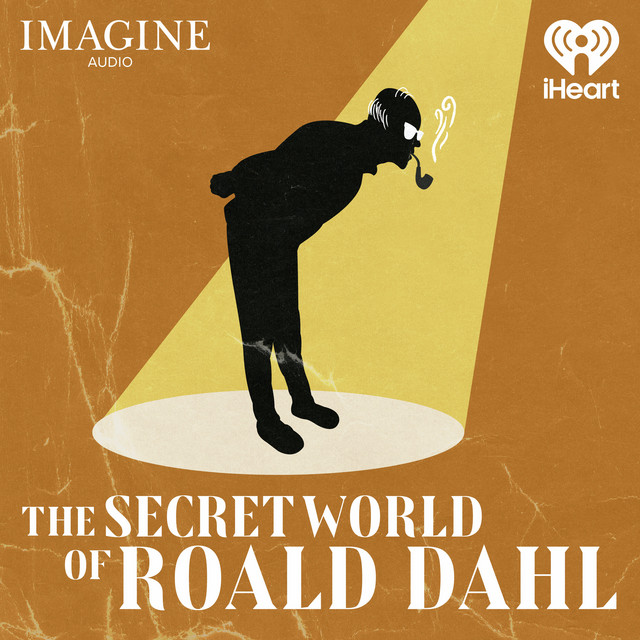
The more I listened, the more I started to think about how he built this whole world around his work.
And in a strange way, I realised I had done the same thing.
No not the spy part and definitely not the affairs part. (I mean, how I managed to pull my girlfriend in still beggars belief!)
I’m talking about the part where your work slowly becomes your entire world.
When I decided to become a full-time musician, I threw myself into it completely. Mind, body, and spirit.
The problem was, I wasn’t prepared for what came with it.
The rejection. The failure. The pressure.
And I definitely wasn’t prepared for how much it would affect my relationship, my friendships, my family, and my mental health.
As much as I don’t like admitting it, I started to believe I had to deal with everything on my own.
By default, you will inevitably spend the majority of your days on your own.
You go into the woodshed. You practise alone. You deal with your problems alone.
So I did. I dealt with my depression on my own. My suicidal thoughts on my own. My financial stress on my own.
I even cancelled doctor’s appointments because I convinced myself I didn’t need help.
I was kidding myself.
Because there comes a point where you have to ask whether your passion has turned into something else. Something that consumes you so much that you forget how to live outside of it.
And that life outside of it isn’t separate from being an artist. It sits right next to it.

I remember one night in September 2024 when I was driving home from the music school.
It had been one of those days.
From 9am to 2pm, it was emails, invoices, lesson plans, cleaning the studio.
From 2:30 to 8:30, it was back-to-back lessons.
Before each lesson, I’d take a deep breath, stare out the window at the sky, and think if only I was up there instead. Then I’d open the door, give myself a quiet pep talk, and tell myself this one would be a good lesson.
Most of the time, it wasn’t.
They were far more interested in picking their noses or pulling guitar strings like they were trying to rip open a Christmas present that might explode if they didn’t get to it quickly enough.
And the most demoralising part was that most of them actually had talent. They just happened to be impossible to control.
Apparently, when you say “be quiet,” children hear, “be as loud and intolerable as you possibly can and do your absolute best to break your teacher.”
And all of this is happening while I’m dealing with whatever problems my tutors bring up that day.
Maybe one of their students didn’t show up.
Maybe a parent is asking for the 450th time how to get their kid to practise.
Or maybe the tutor themselves decides two minutes before their first lesson that they’re “sick”… or they’ve forgotten their car keys.

It wasn’t always bad. There were good days in between the chaos and high blood pressure moments
So after the last student leaves at 8:30, I’m still there.
Picking up rubbish that somehow never makes it into the bin, even though I’ve asked a hundred times.
Sitting back at the computer to reschedule the lessons that got missed, and prepare everything for the next morning.
All of this while I’m holding my breath without even realising it, my chest tightening like someone has been slowly turning a vice between my back and chest all night.
By the time I get to the car, it eases just enough for me to breathe, like it knows I still need to concentrate on getting home.
When I finally get back, I drop everything at the door, which isn’t something I normally do. I usually unpack everything neatly before I sit down.
But that day was different.
I slide down the wall like you see in the movies, where the camera follows the character down until they hit the floor.
That was me.
I didn’t just cry. I shouted, screamed, punched the floor.
The floodgates opened.
Everything I had been holding in for years came out at once.
And in that moment, I had never felt so alone in my life.
Everything I thought I had worked for, the obsession with my music, being the best guitarist I could be, the best teacher, running a music school… it all felt like a lie.
I remember staring at my phone, wanting to message my girlfriend.
But I couldn’t do it.
I sat there for nearly half an hour because I was ashamed. Ashamed that for years I had kept her at a distance.
She might have known bits and pieces, but she never knew the full picture.
And when I finally messaged her, and she asked, “Are you okay?”
I said: “It was a tough day. I’m tired. But I’ll be okay.”
Even when I felt my life was crumbling before me, I still couldn’t open up to her.

It’s been nearly two years since that night, and it certainly wasn’t the last time I had a breakdown like that. I’ve had plenty since.
They weren’t the kind you could brush off and move on from. No amount of practising, gigging, or teaching could help me outrun them.
They’re the kind that make you question everything. Your career choices, your relationships, whether your life is worth anything at all.
And over those two years, I kept coming back to the same thought.
I wanted to run.
I wanted to get in my car, drive as far as I could, get on the next available flight, and start over somewhere no one knew me.
There was a part of me that believed that would be easier than staying and facing what was actually going on.
And even though I knew girlfriend would be there for me in a second, my pride got in the way.
If I go back to The Secret World of Roald Dahl for a moment, this is where I can’t relate to him.
One thing Roald seemed to struggle with was settling down in the way most people would recognise. Even though he was married and had children, he still lived parts of his life in a separate world.
And I think that comes from the kind of life he lived. The double life early on, then becoming the artist he was. He built his own world, and in many ways, lived inside it.
There’s something beautiful about that. You can see it in his stories.
The way Willy Wonka teaches patience, restraint, and appreciation for what you have, even when it isn’t much. Charlie never needed to be the richest kid in the room to feel whole.
But that kind of idealistic world can also blind you.
It can stop you from seeing what’s right in front of you.
When I told my girlfriend in 2019 that I wanted to put my career first, I already had this version of my life mapped out in my head.
I thought I’d meet someone later, maybe when I was 24. That she’d come into my life once everything was already working, once I was touring the world and playing sold-out shows.
I didn’t think I could be both a musician and a good partner at the same time.
So in my head, I needed to “finish” being a musician first before I could fully be with someone.
And because of that, I kept parts of myself closed off.
That’s why I struggled to talk to her and open up. That’s why I kept my pain behind closed doors.
Even though we had so many good moments together—holidays, dinners with each other’s families, building a life side by side—I never fully let her into mine.
And when everything collapsed in 2024, that’s why I felt so alone.
I think the hardest part was realising that music was no longer the escape it once was.
For a long time, it was the thing that helped me make sense of everything.
Whether I was on stage or in a classroom, it gave me a way to believe that things would be okay. It made me feel like I was part of something bigger than myself.
But there’s something I understand now that I didn’t back then.
I was never alone.
I already had that.
She was there the whole time.
Through the failed gigs.
Through the depression.
Through the anxiety, the financial stress.
Through all the moments where I thought about ending my life.
She was there, reminding me, whether I wanted to hear it or not, that I wasn’t alone and I didn’t have to go through it by myself.
It’s something I didn’t fully appreciate at the time.
And it’s something I think a lot of artists miss.

She was also there when I decided it was a good idea to go run in a flash flood.
We’re told to go all in.
To sacrifice. To put everything into the dream. To become passionate and obsessive.
And there’s nothing wrong with chasing something you care about.
But somewhere along the way, a lot of us start pushing away the people who are actually keeping us grounded.
The ones who are there when things aren’t working.
The ones who don’t care whether you “make it” or not.
The ones who are still there when the gigs dry up, when the opportunities don’t come, when you’re sitting there wondering what the hell you’re doing with your life.
This isn’t one of those stories where everything worked out and I’ve got a perfect, happy ending waiting for me.
I don’t.
I still have depression. I still have bad days. Days where the thought of waking up feels just as hard as trying to get through to the end of the day.
But I’m slowly letting my girlfriend in.
And because of her, I’m no longer trying to become a better musician.
I’m trying to become a better man. A better person.
She gives me the strength to believe that I can manage my depression, and that the darkness won’t consume me.
And as for the artist in me, that’s still a big part of my life.
But it’s just that.
A part of my life.
If you’re going to go all in on your music career, go for it.
Take the risks. Chase the opportunities.
But don’t do it at the expense of the people who are standing right next to you.
Because when everything else starts to fall apart, and at some point it probably will, it won’t be the career that holds you together.
It’ll be them.
And most of the time, they’re already right in front of you.
It doesn’t have to be a partner.
It could be a close friend. It could be your parents.

Behind every great musician, is an even better partner for life that you love even more than your music. And my girlfriend has given me more than music has ever given me.
You just have to stop long enough to see it.
Thank you so much for taking 10 minutes of your day to read today’s newsletter. It means a lot to me. At the end of the day, it can be a lonely place when you embark on the artists’ journey. It is a cliche to say this, but you are never as alone as you may think, and sometimes we need to remind ourselves of those little cliches.
On the contrary, I want to finish off by saying you can also go against old cliches. One of them is “follow your passion.”
We’ve all been given that piece of advice in all walks of life, but sometimes that can be dangerous advice, especially if it isolates you from everything else.
I talk about this in my latest YouTube short, which is also a preview to my next Podcast episode.
As a subscriber, you will be amongst the first to see my podcast upon released.
If you’re a long time reader and my newsletter has helped you in your mental health/music journey, please consider upgrading your subscription which costs less than two coffees a week. (Home coffees are better than cafe coffees anyways these days!)
When you do, not only will you gain early access to newsletters like this, but you’ll receive extended cuts of podcast episodes, and stories that are deeper, darker and more emotional moments that don’t make the final cut.
But no matter what, I’m grateful that you’re part of this journey and I hope that you continue to find hope and support with my newsletter.
Thank you so much for your support, I truly appreciate it.
In the meantime, share this with someone close to you to remind them they’re not alone and take care of yourself!
-Brian.
