

In partnership with

I’ve spent an extraordinary amount of time with depression. In fact, I think depression and I have been closer than most of my houseplants — and neither of us thrived.
Some of our best “moments” together happened at precisely the worst possible times in my life.
For example, depression once took Anxiety along to one of my yearly music exams, and they both sat front row, watching my fingers turn into noodles — flopping around in a way that reminded me far too much of the inflatable car-salesman waving his arms around outside the Toyota dealership on Parramatta Road in Sydney.
That, in its own weird way, was one of depression’s better pranks.

Give that man a pay rise.
Then, sometime in 2023, without a moment’s notice, depression introduced me to his third friend, Suicide.
Suicide wasn’t shy. Suicide was loud, impatient, and punched in the door without asking. Depression and Anxiety knew when to take a break — go nap, watch a movie, maybe get sushi — but Suicide just lingered, relentlessly pestering me every day like Newman from Seinfeld (only I think people secretly like Newman)

On the flip side, there were times when depression was the only thing with me during my loneliest moments — when I felt banished into another world. It stood beside me, quietly telling me to stop fighting, to let go, to give up because then the pain would finally end.
And yet, in a strange twist of tragic irony, there were times when, in my loneliest moments, depression was the only thing that showed up. It stood next to me, whispering things like “Let go, don’t fight it. Just give up. The pain will finally stop.”
Depression has even come with me to every single therapy session.
Most of the time, it tells me I’m wasting my time. That I’m only lucky my sessions are covered by Medicare — because otherwise I might as well hand my money out like hotcakes.
But surprisingly, in between the moments of goading and mocking, there’s been the odd moment where depression has accidentally reminded me of what actually works for me.
In my last session in December 2025, my therapist summed up the year and told me to remember a few things:
Thoughts are not facts.
Avoid all-or-nothing thinking. Find the middle ground.
Sit with emotions like wave in the ocean, then let them pass.
Visualise a balloon expanding when anxiety rises.
Be mindful of things like the taste of coffee, the colour of the sky, the smell of grass.
As I sat there, grinding my bottom lip, trying not to scoff, depression whispered in my ear:
“Seriously…you’re telling me the colour of the sky matters now?”
“What’s next?
Visualise an elephant while you scurry around like a mouse trying to avoid its trunk?”
Because of course it did.
And honestly… at the time it never seemed useful. But something about the simplicity of Depression’s cynicism flicked a switch in my mind. It made me realise that maybe, just maybe, I didn’t need philosophical life-hack metaphors with a partridge in a pear tree.
In many ways, depression has mirrored all the chaos in my life over the last decade. There were so many moments when I felt like I was one slip away from a complete breakdown and in late 2024, I did break down completely. But I found a path back in 2025, and I’ll keep walking it into 2026.
If depression has taught me anything to me — it’s that life is chaotic, unpredictable, and utterly uncontrollable. But it’s also taught me, inadvertently, that I’m a hell of a lot stronger than I ever gave myself credit for.
And even though my therapist’s suggestions sometimes felt silly — balloon visualisations, mindful coffee — and even though depression mocked every metaphor as it was introduced… the message eventually landed: slow down.
To slow down just enough to give myself a chance to breathe again.
After twelve therapy sessions in 2025, each one essentially repeating the same lesson dressed up in a different metaphor or inanimate object, the message finally got through.
And that’s the part that brings me back to what I said earlier about depression being that one constant companion in some of my loneliest moments. In those times when I felt unloved and unwanted, there actually was someone there with me.
No…it wasn’t depression.
I’m not that hopeless. (Or at least I hope I’m not.)
It was the people who care about me — my friends, my family, my girlfriend — woven into the very fabric of my mind, my heart, my memories. They were there, even when I felt cut off from the world.
Maybe humanising depression and giving it this strange “friendship” role in my internal narrative is part of why I’ve been able to talk about it so openly for so long. Maybe it’s just a natural result of writing about it repeatedly until the edges softened.
Or maybe this odd little psycho-friendship is slowly fading into a distant acquaintance sooner than I think.
I can’t imagine my life without depression. Before it entered my world, I was an arrogant, bratty teenager who was dismissive of my parents, picking fights with teachers, and blissfully unaware of anyone else’s suffering. I wasn’t a bad kid. I was just loud, annoying, and lacking self-awareness.
Somewhere along the way, through the crying, the chaos, the spirals, and the self-loathing, I learned a thing or two about empathy. I learned to listen with genuine care to my friends when they tell me about their struggles. I learned to celebrate other people’s successes as much as my own. I learned to be okay with not being okay.
I don’t know if I want to stay friends with depression forever. But if it becomes a distant acquaintance, someone I occasionally nod to in the street, I think I’d be okay with that.
Maybe what I’m trying to say is this:
For the first time in my life, I’ve genuinely accepted that depression has been part of my journey, and it might continue to show up from time to time.
My mind will always find ways to wander into the dark and ignore the good in my life. And when it does, depression might return to keep me company for a little while. But it won’t be the voice that has the final word. It will remind me there’s light, there’s love, and there’s a world out there full of people who genuinely care and opportunities to live a good life.
In its own warped way, it’s been one of my greatest teachers.
So… if I could say one thing to depression, I guess it’d be…thank you?
Thank you for taking 10 minutes to read today’s newsletter. It means a lot.
When I sat down at the start of 2026, I thought about how could I write more stories that allow me to be vulnerable, but allow you to make your own meaning out of them.
So I wrote this…love letter if you can call it that.
If you liked reading this, please let me know, and share what meaning you drew out of them.
There will be more more music-focused newsletters this year where I write pieces about the state of mental health support in the music industry, what’s available around the world, and essays about well-known artists, past and present, who have struggled with mental illness.
Thank you for sticking by me in 2026.
If you ever need someone to talk to, please send me an email, reach out, I’ll do my best to reply. If I don’t reply straight away, know I’ve still read your email and I will do my best to get back to you asap.
In the meantime, take care of yourself and be well.
-Brian

P.S. If you’re a long time reader and my newsletter has helped you in your mental health/music journey, please consider upgrading your subscription which costs less than two coffees.
If you decide to upgrade, you’ll get an exclusive first look at the full drafts where your input, questions and feedback will shape the final outcome of each newsletter.
You’ll also get access to audio versions of each newsletter, done by me, not an AI bot, and podcasts where I have conversations with fellow musicians and friends about their mental health challenges as musicians.
You’ll get also get access to audio versions of each newsletter, done by me, not an AI bot, and special video podcasts where I have conversations with fellow musicians and friends about their mental health challenges as musicians.
Here’s a sneak peak at what you get, with one of my audio newsletters from earlier this year.
But even if you’re a free subscriber, you’re already supporting me, and I’m grateful for that.
So I’d love for you to forward it to a friend or fellow musician who might find comfort in it. The bigger our community, the more we can help artists around the world share their mental health stories and feel less alone.
Speaking of podcasts…
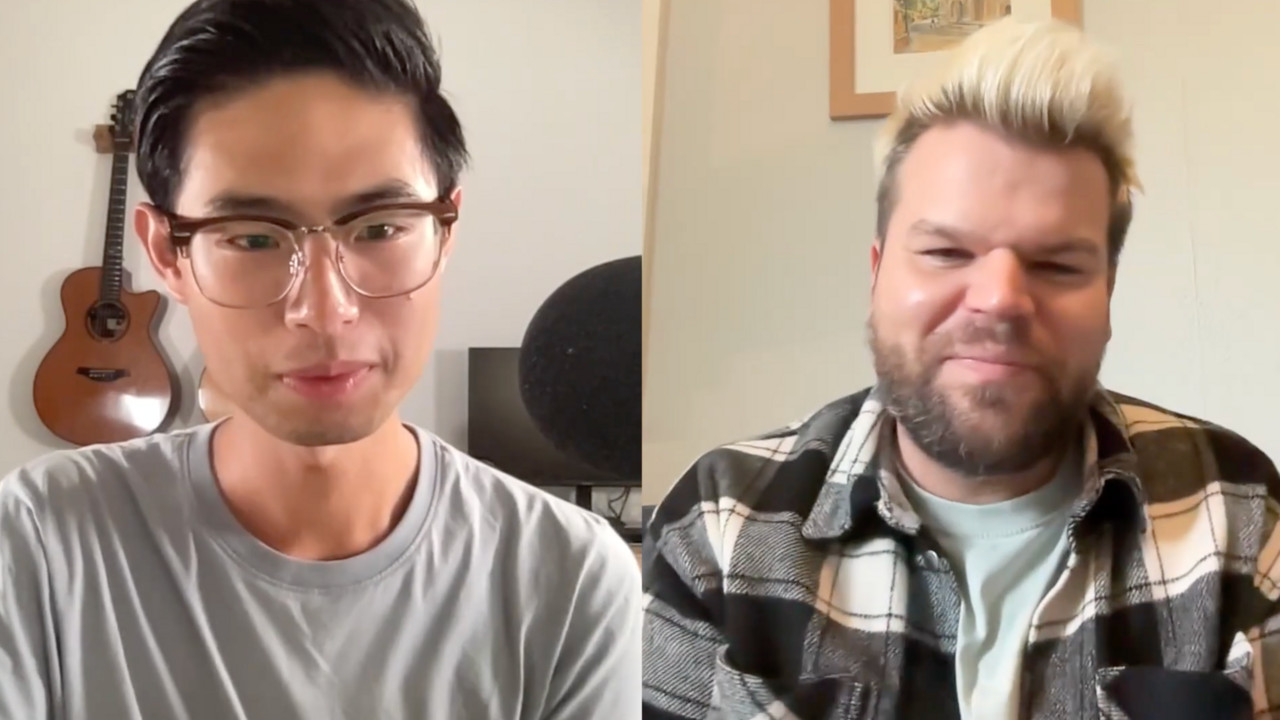
I’d like to quietly announce that I’ve just uploaded the very first episode of the Mental Musician podcast!
This has been a long time coming, I wanted you guys to be the first to know about it.
The first episode features my good friend Michael Wright, a wonderful teacher and the smoothest jazz bassist kicking around in the UK. We talk about his life as a professional musician, dealing with depression and ADHD, and how he’s found ways to open up and be vulnerable. All in all, this conversation and podcast is about having real conversations about the real mental health struggles that artists around the world go through.
I hope you enjoy this first episode, save it on your spotify/Apple playlist or wherever you listen to your podcasts. Please share it with your friends and fellow musicians and even if you only listen to half of it, it’ll mean the world to Michael and me.
Spotify
Apple Podcasts

Thanks for reading!
Feeling Anxious? You are not alone

Get help from a licensed therapist - anytime, anywhere. BetterHelp has helped over 5 million people, with no commitment, 100% online.
Take the first step, with 25% off your first month, and a network of 30,000 therapists to choose from. BetterHelp therapy is HSA + FSA eligible. Just take our quiz to get matched with a therapist and start your journey.
This email was delivered by a third-party, on behalf of BetterHelp. Copyright © 2025 BetterHelp. All Rights Reserved. 990 Villa St, Mountain View, California, United States.
